
CHARLES HORSFALL
Shipbuildervessel built by
Alexander HALL & Co.
(Footdee, Aberdeen)
Date1 February 1855
Object NameCLIPPER
MediumWOOD
ClassificationsShip
Dimensionslength 182' x breadth 32' 5" x depth 18' 4"
tonnage 798 tons
tonnage 798 tons
Object numberABDSHIP001081
Keywords
Yard Number: 193
Official Number: 1587
Fate: unknown, last in Lloyd's 1877 (C582).
Propulsion: Sail
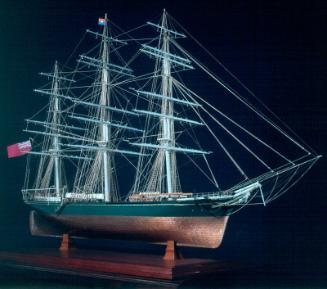
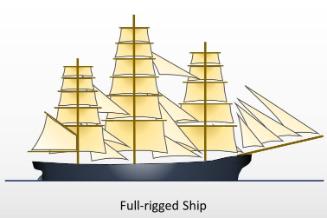
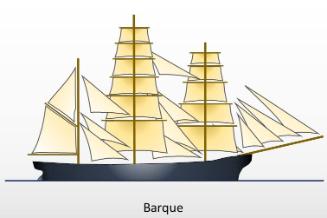
Description: Ship rigged clipper, part iron framed
Owners:
1856-77: Charles Horsfall & Sons, registered at Liverpool
Masters:
1856-58: Master Finlay
1859-61: Master. E. Hughes
1862: Master J. Downie
1863-72: Master Thompson
Voyages (from Lloyd's):
1856-65: Liverpool - Africa
1866-72: Liverpool
General History:
Unusually CHARLES HORSFALL’s builders and owners attempted to earn on its delivery voyage from Aberdeen. On 9 March 1855 Alexander Hall advertised in the Aberdeen press that the vessel would take whatever cargo offered from its berth on Waterloo Quay to Liverpool. Also, unusually for an Aberdeen clipper CHARLES HORSFALL appears not to have been fitted with passenger accommodation and was not advertised to carry passengers. It was built for and appears to have spent most of its career on a very specific trade- from Liverpool to Bonny to load palm oil, on which its maiden voyage began on 12 May 1855. The kingdom of Bonny was a very traditional state on the Nigerian Coast. It had been a major slave-trading centre until the abolition of the British slave trade in 1807, after which it became a base for the palm oil trade. Palm oil was used for cooking, in the manufacture of food products and cosmetics and, importantly at that time, as a lubricating agent for industrial machinery. The textile mills of Lancashire were thus a market for the palm oil landed at Liverpool, and it presumably carried their products on the outward voyage to Nigeria.
In its early days CHARLES HORSFALL had problems with the Liverpool port authorities. In 1857 the owners, Charles Horsfall and Sons, complained of what they described as exorbitant fines on palm oil discharged from the ship and for remaining on the berth for longer than allowed by dock regulations. The unloading of oil barrels was presumably labour-intensive and time consuming.
Newspaper reports of CHARLES HORSFALL’s movements, mainly in the Liverpool press, gives some information on the pattern of its voyages to Bonny. Turnaround time in Liverpool seems to have been about a month, significantly shorter than the Australian clippers at London, For example, in 1865 it arrived at Liverpool on 25 April and sailed again on 27 May and in 1867 was at Liverpool from 26 April to 23 May. Like any sailing ship it was subject to wind conditions. In February 1859, for example, it had to put back to Liverpool ‘more or less injured’. On 30 June 1870 there was launched from a Clyde shipyard, the BEE, to be employed by Charles Horsfall and Sons ‘on the coast of Africa in the palm oil trade. As no newspaper reference has been found thereafter to CHARLES HORSFALL, BEE may have been its replacement.
Sources (from British Newspaper Archive)
Aberdeen Free Press, 09/03/1855; Liverpool Albion, 05/01/1857, 29/04/1867; Liverpool Daily Post, 02/06/1865; Morning Advertiser, 25/04/1865 and 23/05/1867; Shipping and Maritime Gazette, 05/07/1870; Tralee Chronicle, 06/02/1859.
Newspaper extracts:
07/02/1855:
LAUNCH - On Thursday last there was launched from Messrs Hall's building-yard a splendid ship, which was named the "CHARLES HORSFALL", measuring 798 tons new measurement, 860 old measurement. Designed for the African trade (palm oil etc) owned by Messrs Horsfall & Sons, an eminent Liverpool firm. She made a first-rate launch.
(Aberdeen Journal)
03/02/1860:
Mutiny on Board a Ship in the Mersey.—At the Liverpool police court, on Tuesday, ten sailors on board the ship CHARLES HORSFALL, bound for Africa, were charged with mutiny and refusing to proceed to sea. They alleged that they had not bad beef to their tea on Monday, and that the forecastle was too small for the crew. The captain said that though the vessel had lain in the river for live days, the prisoners did not complain till she was about to sail; that she had had ten men more than his present crew in the same forecastle, and that in warm latitudes he supplied hammocks to such of the men as preferred them to bunks. The prisoners, who still refused to sail the ship, were sent prison (having each received doable advance on shipping) for ten weeks.
(Belfast Mercury)
11/07/1866:
West Coast of Africa - steamer TERRIER was spoken and supplied with provisions by ship CHARLES HORSFALL, 30 May.
(Birmingham Daily Post)
Note: Contract cost, £13120 or £15 5s. per ton (builder's list held in the Lloyd's Library of the Aberdeen Maritime Museum)
1841
1870
